
Tips to Successfully Write an Ebook
I can imagine wanting to successfully write an ebook and thinking it’s challenging. But writing an ebook is actually the easiest way to get your book out there if you’ve ever dreamt of being an author. Or if you have great ideas that you know shouldn’t stay hidden.
Now, if you’re not on a strict budget, you could share your idea with a self-publishing company like Nnika Publishing to help you from the ideation stage down to the published copy. We do ideation and ghostwriting, so you don’t even have to write it yourself.
However, if you want to write the ebook yourself, let’s take you through the process of successfully writing one.
What Is an Ebook?
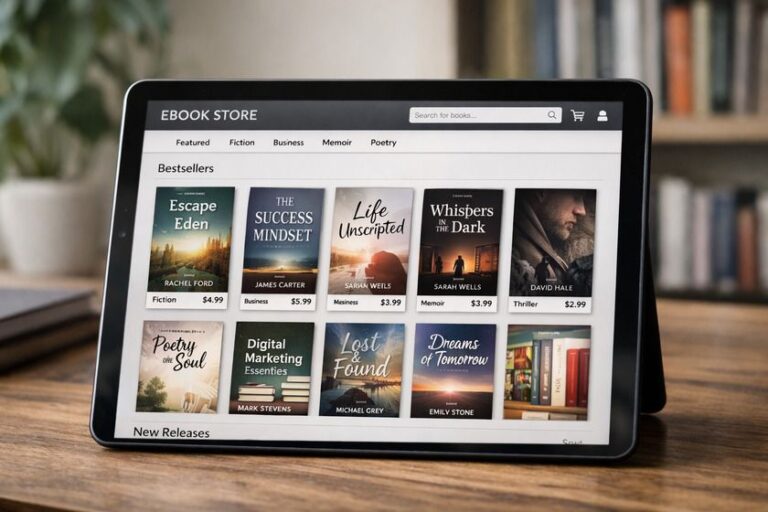
An ebook is a book in digital form that you read on a phone, tablet, laptop, or e-reader instead of flipping through paper pages.
And beyond that simple definition, it is really just a regular book delivered in a more flexible way. It can be a short guide, a how-to manual, a personal story, a workbook, or even a full-length novel.
Most ebooks are created to solve a problem, share knowledge, or tell a story without the cost and stress of printing physical copies.
So, you write your book, edit, format it properly, and people can download it anywhere in the world within seconds. That ease is what makes ebooks so popular.
But apart from that, they are affordable to create, easy to distribute, and perfect if you want to share ideas, teach something useful, or build authority around what you know.
Now that you know what an ebook is, let’s address why you need to publish one.
Why You Should Write an Ebook
Writing an ebook is one of the simplest ways to package what you know and put it to work for you. Here are a few solid reasons to do it.
- It helps you share your knowledge in a clear, structured way.
- It positions you as someone who knows what they are talking about.
- It can create an extra stream of income, even while you sleep.
- It is cheaper and faster to produce than a physical book.
- It allows you to reach people anywhere in the world.
- It gives your ideas a permanent home instead of scattered posts or notes.
- An ebook lets you turn experience, lessons, or skills into something valuable and easy to access.
If you are a business owner, you should particularly consider publishing one. We’ve documented our thoughts on the major ways publishing an ebook helps your business.
Tips to Successfully Write an Ebook
1. Choose your topic
First things first, you’ve gotta pick something you actually care about. This is because if you’re bored writing it, I promise you that your readers will be bored reading it.
You need to write something you’re passionate about and know a lot about, which is why ebooks are a great way to market your business.
It’s your business after all, so it’s safe to assume you know a lot about it and have a lot of information that could help prospects.
By doing that, you show expertise, and customers are likely to trust what you’re selling.
Now, of course, it will be wrong to try to be the “expert on everything.” That means you shouldn’t try to write about everything or even consider writing about what you don’t know much about.
Sure, you will still carry out research. But you still need to have a broad knowledge of the topic on your own.
So a good rule of thumb is to find that one thing you can talk about for hours and lean into it.
2. Identify your target audience
You can’t write for “everyone.” Trust me, I’ve tried, and it just ends up being a mess.
So, you must ask yourself who you are writing to. Is it a stressed-out college student or a retired grandma who loves knitting? Because you won’t use the same language for both categories of people.
Besides that, their pain points are different. So, you will be approaching the work from different perspectives.
That’s why you can’t just start writing without determining your target audience.
Once you know who they are, you’ll know exactly how to talk to them without sounding like a robot.
3. Do your research
I know I said you should write about what you know earlier. Still, you need to double-check it.
In the first place, don’t just pick up your pen and paper or open your Doc and start writing straight from your head.
Make sure you do proper research to get your facts and figures right. Some things may have been updated since the last time you checked, so do research to confirm you’re writing accurately.
Besides that, you need to research trends around the book. Go see what other books are out there in your niche.
Particularly, see what other people are complaining about in the reviews. For instance, if they’re all saying, “I wish this book had more recipes,” then you know you’d better put some recipes in yours.
Moreover, conduct adequate research on the topic(s) you intend to cover to determine whether or not there is currently a viable market available for it and to choose the right narrative for your book itself.
Do this by checking existing books that are similar to yours to see how they did in the market. You can also research trends around specific keywords and phrases that are most relevant to your book topic.
All these will let you know if the book is worth writing.
I know you want to share your knowledge, but you also want to make sure you are adding something to the body of knowledge available and make some money while at it.
Proper research will give you that answer.
4. Structure your chapters
I know some writers might disagree because they may have mastered the art of typing and hoping for the best. However, you can’t afford to do that as a new writer, or you’ll soon hit a wall.
If you want to avoid experiencing writer’s block in the middle of your project and struggle to get back to it, I advise you to outline your chapters before you start.
Map out all the sections you want to cover. You can do it chapter by chapter, which is what I recommend. I usually write down what every chapter will cover before I start writing.
However, you could also create an outline based on the following structure:
- The Hook: Start with something juicy.
- The Meat: Break your main points into logical steps.
- The Summary: Remind them what they just learned and tie it all up together.
Also Read: Effective Ways to Create a Working Novel Structure
5. Write each chapter
Now comes the actual writing, which is the most fun part for many. But it could also be the most challenging, especially if you’ve not mastered the art of freewriting.
If you’ve never heard this term before, freewriting is a writing technique where you write non-stop for a set amount of time without thinking, analysing your words or pausing.
That means, you don’t stop to think whether a particular phrase reads well or a certain sentence is clunky; you just write.
The reason this technique is recommended for the first draft is that it keeps you going; it lets you get the words out and then edit later. Stopping to think can make you overthink and keep you in self-doubt, and you may never finish the project.
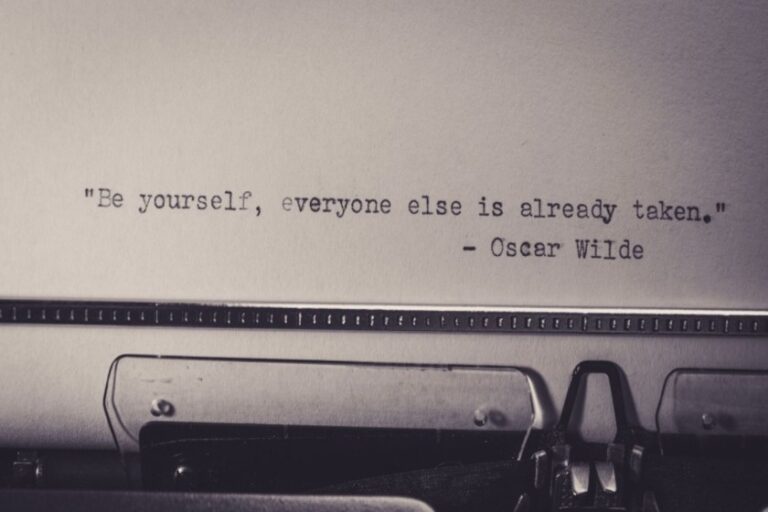
That’s why we should always follow the words of Ray Bradbury. According to the American author, “Don’t think”, because “thinking is the enemy of creativity”.
So, just sit down and get the words out. Don’t worry about being perfect right now. Ignore every error and keep moving.
Later, you can correct everything wrong with the writing.
But you can’t fix a blank page; you can only fix a bad first draft.

6. Self-edit
Once you’re done, take a breather. Like, seriously, go outside for a day or two.
Don’t try to edit immediately; your brain is probably exhausted from all the work you had to do.
So, give it a day or two. Then, come back and read your book out loud.
It sounds totally goofy, I know, but you’ll catch so many weird sentences and typos that your eyes just skipped over before.
7. Get a professional editor
After self-editing, you need a professional editor to give it a proper look.
Now, I understand you think you have perfect work because you’ve edited. But even the best of writers have external editors. In fact, they are up there because they do.
Trust me, you need a second pair of eyes that isn’t yours (or your mum’s, because she’ll just say it’s “lovely”).
You need someone who will be honest with you and see things you will miss because your brain sometimes reads what you meant to say, not what’s on the page.
Plus, a pro editor will find those plot holes or logic gaps that you’re too close to the project to see.
You can get an editor from a publishing firm like Nnika Publishing or hire a freelance editor.
8. Design and format the book
People totally judge a book by its cover.
It’s a sad truth!
So, if you want your book to have a fighting chance, make sure yours looks pleasing to the eyes or at least sends a message.
Here are some tips:
- The Cover: Use bright colours or a clean, modern layout.
- The Font: Stick to something easy to read (save the curly calligraphy for your wedding invites).
- Spacing: Make sure there’s enough “white space” so the reader’s eyes don’t get tired.
Now, I get that you are probably good with Canva and love DIY, but it is always better to hire professionals for design and formatting.
For the former, you don’t want people passing over your book because the cover turned them off, and for the latter, you don’t want ebook platforms rejecting your book because it was wrongly formatted.
We offer all of these services at Nnika Publishing; you can contact us, and we will get your book ready in no time.
9. Publish your ebook
Once your book is ready, the next thing is to publish it on ebook publishing platforms like Amazon KDP or Draft2Digital. If your book is well-formatted, it’s usually as simple as uploading your file, picking a price, and hitting “publish.”
But double-check your previewer first to make sure your pictures didn’t end up upside down or something crazy.
10. Market your book
You can’t just publish your book and hope people find it. You’ve got to let people know the book is available and would be beneficial to them.
Follow the tips below:
- Choose the platform you find more comfortable and post consistently.
- Create different kinds of content around your book: could be videos, excerpts, questions and answers around the book topic(s), etc.
- Send an email to your friends and family.
- Run a little “free for 24 hours” promo to get some reviews rolling in.
- Organise book reading events
Wrapping it all up
Writing a book is a huge deal, and you should be seriously proud of yourself for even starting. But hey, if you want to take the stress out of the “making it look professional” part, you should totally check out Nnika Publishing.
We’re awesome at helping authors turn their rough drafts into polished masterpieces without the usual headache. Give us a shout and let us handle the heavy lifting while you focus on your next big idea.
Frequently Asked Questions
How long should my ebook be?
Honestly, there’s no right answer. Some of the best ebooks are only 30 or 50 pages, while some are longer. Just focus on being helpful and avoid fluffing it up just to hit a page count.
Do I need a fancy computer to write?
No, you don’t need a fancy computer to write. You can write on Google Docs, Word, or even your phone’s notes app if you’re feeling brave. As long as you can save it as a PDF or ePub later, you’re good to go.
Is it expensive to publish?
It doesn’t have to be expensive to publish. If you do the writing and some of the marketing yourself, your main costs will just be editing and cover design.