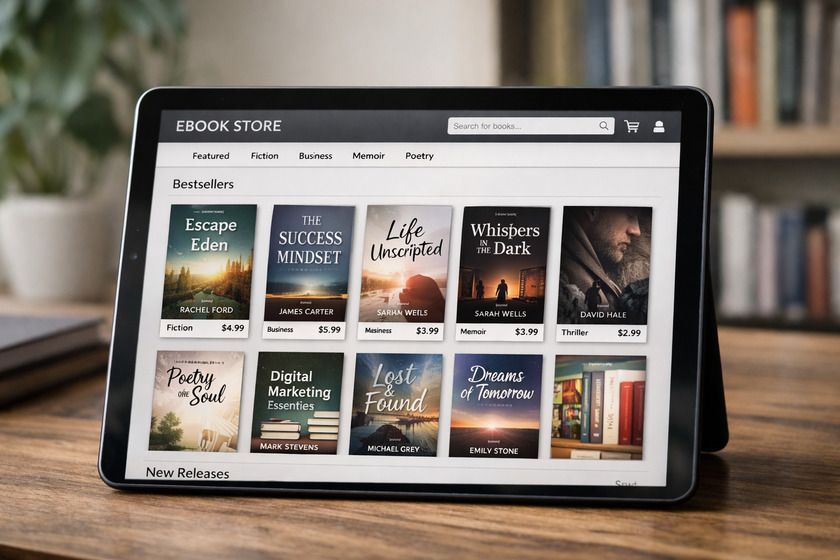
Top Online Platforms to Self-Publish Your Book
Many people think self-publishing is simple. They think it is simply about uploading your manuscript to one of the online self-publishing platforms, clicking publish, and waiting for readers to appear.
But that isn’t the exact picture. Because platforms can crash, books vanish into thin air, and payments arrive late, or they never come. Sadly, most authors only discover this after their first release, when the excitement has already worn off.
Before you make that mistake, it helps to have a guide. After successfully writing your ebook, choosing the right online platforms to self-publish your book is crucial because that single decision affects who sees your work and whether your earnings show up at all.
This article brings together the best online platforms to self-publish your book, what they do well, and where it gets bumpy.
Major Global Online Platforms to Self-Publish Your Book
If you want your book to reach readers beyond your immediate circle, these are the biggest names to know. Think of them as platforms to self-publish a book that gives your work a real shot at being seen around the world.
1. Amazon Kindle Direct Publishing (KDP)
This is the biggest name in the game and costs nothing to publish. However, the competition is fierce because the gates are open to everyone. So, your formatting and cover need to look the part, or you risk your book disappearing into the crowd.
2. IngramSpark
IngramSpark is the way to go if you want your book in physical bookstores and libraries. Its reach is wide, but beginners often struggle with the setup. Take the time to meet their file requirements, and it can work strongly in your favour. One well-prepared book is worth ten rushed ones. This is slow-cooked publishing; it takes effort, but the result is usually worth it.
3. The “Wide” Aggregators
If uploading to ten different stores sounds exhausting, these ebook self-publishing platforms step in and handle that part for you.
Draft2Digital
This platform is a good option if you are just starting out. Draft2Digital just takes a small portion of your sales, usually 10% of the retail price, and distributes your book to stores like Apple Books, Kobo, and Barnes & Noble automatically.
PublishDrive
Uses a subscription model. You pay a monthly fee, starting around $16.99 to $19.99, and keep 100% of your royalties. This works best for authors who want a wide reach without living inside spreadsheets.
4. Direct Retailers
Going direct means higher profit margins, but also more responsibility. Apple Books reaches about 1.4 billion users, while Google Play Books works well for Android readers. It is like running several shops on the same street; you get more foot traffic.
Local and Regional Platforms for Direct Sales
Global platforms give you reach, but choosing the right online platforms to self-publish your book can also mean better control over payments, visibility, and direct reader engagement.
1. Selar
Selar is one of the strongest options for Nigerian authors who want fewer payment headaches. It supports both naira and dollar payments and works best if you already have a social media audience or a clear marketing plan. Think of it as your own online bookstore. You bring the readers, and Selar handles the checkout.
2. Bambooks
Often described as the Netflix for African books, Bambooks runs on a subscription model and helps your work reach readers who may not have found you otherwise. Treat it as a visibility and discovery channel rather than a main income source.

Why “Doing It All Yourself” Can Backfire
Many writers think “independent” means “do everything alone.” That is often where things go wrong. You could run into problems like:
- Manuscripts rejected by IngramSpark or Amazon because of simple formatting errors.
- Covers that look homemade, which immediately hurt credibility and sales.
- Tax or ISBN issues that delay your earnings for months
Publishing Is the Beginning, Not the Finish Line
Choosing the right platform decides how far your story can go. It affects who reads your book, how easily you get paid, and whether it stays visible or quietly fades away.
Self-publishing is not just about putting your book online. It is about making choices that give your work a real chance to succeed.
Like I said earlier, some writers try to do everything themselves. Others find out the hard way that small details can ruin months of effort. Covers that do not catch the eye, formatting that looks wrong on certain devices, and missing ISBNs that make it hard to track your book are the things that often matter most before anyone even opens your book.
For authors who want help while keeping their voice, Nnika Publishing handles the parts you might not see. We create covers that fit your story, format your manuscript for print and digital, make illustrations to bring your story to life, and help secure ISBNs so your book is properly recognised and protected.
Reach out to us today, and we will make sure your book is ready to meet the readers it deserves.
Frequently Asked Questions
1. What’s the best platform to self-publish a book online?
The best platform to self-publish a book online depends on your goals. Amazon KDP is the easiest way to reach lots of readers. If you want your book in physical bookstores, IngramSpark is the standard. For Nigerian authors who want simple local payments, Selar usually works best.
2. Can I publish my book on multiple sites?
Yes, you can publish your book on multiple sites; it is called “going wide.” You can upload your book to Amazon, Apple Books, Kobo, or use a service like Draft2Digital to handle them all at once. Just remember that if you sign up for KDP Select, your ebook must stay exclusive to Amazon for 90 days. However, you can still sell print copies elsewhere.
3. Do I need an ISBN?
For ebooks, Amazon gives a free ASIN, so it is optional. For print books, you really need one. It’s like your book’s ID card. Without it, libraries and bookstores might not be able to order your book and your “publisher” will show as the platform instead of your own name.
4. How do I handle international taxes and payments from Nigeria?
Platforms like Amazon ask for a W-8BEN form so you are not double-taxed. Many Nigerian authors also use digital banks or Selar to make receiving USD royalties easier.
5. Why was my manuscript rejected?
Usually, your manuscript was rejected not because of the story but because of the formatting. Common issues include: images that are not 300 DPI, bleed settings that do not match your book size and a cover title that does not match your metadata exactly.